

Hello, Dr. Talley here! Today I’m sharing a personal story that I hope provides clarity, comfort and confidence to any parent navigating the possibility of a tonsillectomy and/or adenoidectomy for their kiddo.
From one mama to another, I understand that this is an overwhelming decision, and I hope that sharing my personal experience helps give you the tools to make the right decision for your family. My goal in writing this blog is simple: to offer the perspective I wish I had when my family began walking this path.
To skip ahead, I ended up landing on an overwhelming YES to both the tonsillectomy and adenoidectomy for my then three-year-old son — and I’m incredibly grateful I did. In this blog, I’ll walk you through my experience, including:
- The signs I noticed at home
- How I chose a provider
- What ultimately led to my decision
- What the day of the procedure was like
- How I prepared and what recovery really looked like
- And most importantly: whether it was worth it
Why I’m Writing This
When I started researching this procedure, I found very little (*cough, none) content to help prep and guide me on home care, how to prepare and what recovery was like from the perspective of a parent. I remember thinking, I just wish I had a mom friend to talk me through this.
So this post is me being that mom friend to you!
A Little About Me
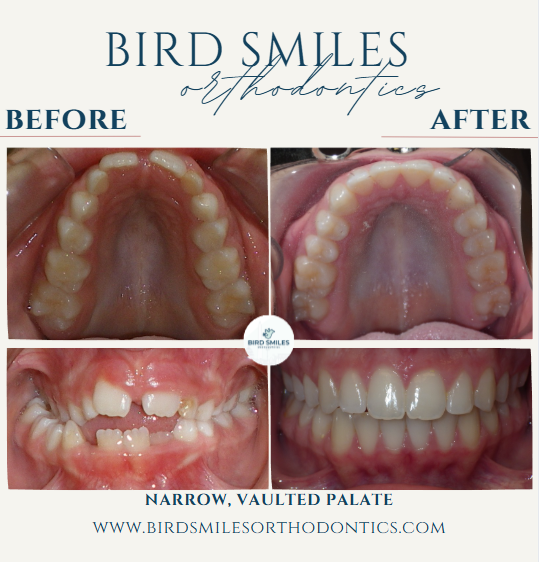
I’m a mom to three living in Washington, D.C., an orthodontist and the owner of Bird Smiles Orthodontics. In our office, I screen patients for enlarged tonsils, nasal breathing, snoring, and palatal shape (a narrow vaulted palate vs a flat shallow palate). And I’ve seen firsthand how mouth breathing and poor sleep quality can affect a child’s growth and development.
I also know how personal these decisions are, and that no two kids (or families) are alike.
What I Noticed First
Around age two, I started noticing a few things about my little guy: he snored in his sleep, breathed mostly through his mouth and had a more exaggerated gag reflex. He was three when I peeked into his mouth and I saw that his tonsils were — no exaggeration — touching each other with just a uvula hanging between. In the ENT world this is a sign to look more closely at the airway and so I began to do my research on providers in the D.C. area.
As an orthodontist, I also knew to look at the palate. His was on the narrower side, and knowing that the roof of the mouth is also the floor of the nose, this raised some red flags. In fact, upper jaw expansion can improve nasal airflow, something I consider often when evaluating my orthodontic patients.
Although he didn’t check all of the red flags associated with taking next steps to schedule a consult with an ENT, you can bet his orthodontist mama made that appointment anyways.
I want all my kiddos to primarily be nasal breathers, there is so much research on why.
Advantages of nasal breathing include:
- Air Filtration: Traps dust and pathogens with hairs and mucus.
- Humidification: Moistens and warms air, protecting the respiratory system including the tonsils and adenoids & helps reduce the workload of the adenoid and tonsils
- Diaphragm Engagement: Promotes deeper breathing.
- Stress Reduction: Calms the nervous system.
- Better Sleep: Reduces snoring and sleep apnea.
Red Flags for Tonsil or Adenoid Removal
Here are some common signs to look for (according to Children’s Health):
Tonsillectomy:
- Frequent strep or tonsillitis (multiple times a year)
- Snoring
- Difficulty swallowing
- Large tonsils visible in the mouth
Adenoidectomy:
- Chronic nasal congestion
- Mouth breathing
- Snoring or sleep apnea
- Dark under-eye circles
- Behavioral changes due to poor sleep
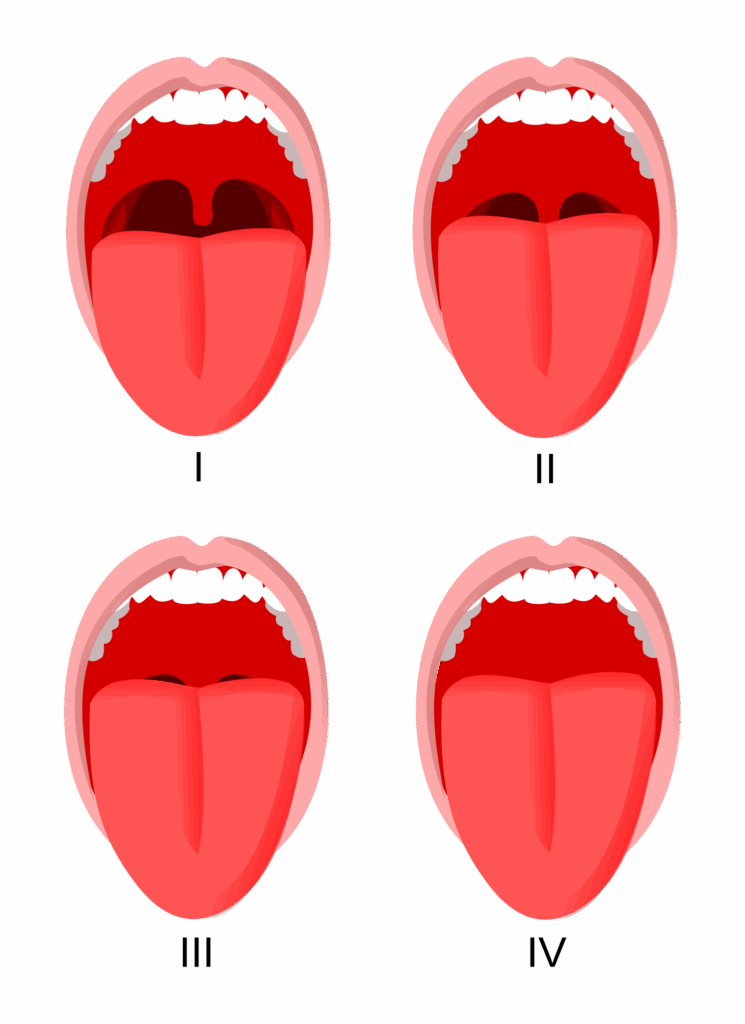
Image: Mallampati airway classification — courtesy of Jmarchn / Wikimedia Commons (CC BY-SA 3.0)
Choosing a Provider
I flagged my concerns to our pediatrician, Dr. Christi Hay, who referred us to a wonderful ENT specializing in pediatric care, which was an important factor for me in choosing a provider.
At our consultation, I hoped to hear that my little guy’s enlarged tonsils were associated with a cold that would resolve on its own (even though I knew it was chronic). But our ENT specialist gently explained that wasn’t the case. His adenoids were obstructing his nasal airway, and his tonsils were — in her words — “the largest she’d seen that day”. The provider we moved forward with is highly experienced with performing these procedures on kiddos and this was very apparent at our consultation. Her extensive experience allowed for me to move forward with the next steps.
She gave us the option of removing the adenoids alone or doing both procedures at once. She emphasized that the tonsils weren’t going to shrink with time, but left the choice to us. For us, doing it all in one go made sense.
So, we intentionally scheduled the procedure for the first Monday of summer vacation. It would be the first thing we tackled over summer break and then we could enjoy the summer with clear nasal breathing, proper palate formation, a rested body and more oxygen for my growing little one!
Here’s What I Packed for Surgery Day
- Stuffy of his choice
- Cozy fleece blanket — hospital sheets ain’t it
- Rescue inhaler if needed (our son has reactive airway disease)
- Water bottle for pre-op hydration
- A low-suction sippy cup for post-op drinks (this is a super important detail as high suction could impede healing)
- New toys — we did a dinosaur sticker book and hot wheels to play with in the waiting room
- iPad (in case the toys didn’t cut it)
- A change of clothes for our little guy
- Snacks & a book for us parents
- Hoodies for us — though the waiting room wasn’t as cold as we expected
The Day Of
We had the procedure done in an outpatient clinic, 6400 Goldsboro road which is the Mass Ave Surgery center. Little kids are typically scheduled first for surgery since they can’t eat after midnight. At three and a half, his surgery was planned for 9:30am and we were instructed to arrive one hour early.
Our kiddo patiently waited in the waiting room that was, to our surprise, not too chilly! The staff was kind and they had coffee and hot/cold water available.
My biggest pearl for day of: THIS IS A TWO ADULT SITUATION. I was primarily responsible for caring for our little guy and my husband was primarily responsible for getting us there and back. I say this because the drive home was super *interesting* with an anesthetized toddler.
In the surgery center only one parent is allowed back with patients for pre operative vitals and post operative recovery, so I went back with our son. A friend had advised me to bring a second adult so I could sit in the backseat with him on the drive home — this was a game changer in terms of our experience as parents in that moment. Coming out of anesthesia is disorienting, and being able to hold his hand (and head up) on the ride home made a big difference. Alas, I’ve skipped over the main event….
In pre-op, he changed into his gown and hospital socks, and then received a dose of Versed. About 20 minutes later, I suited up in a gown, hair cap and shoe covers, and we rolled into the OR together. He was already sleepy. I helped him onto the surgical bed, and they gently placed the anesthesia mask on his face. He was calm, and as I kissed his forehead, our ENT specialist looked me in the eyes and said, “We’ll take great care of him.”
I held onto those words like gold.
Recovery: What It Really Looked Like
An hour later, they told me he was done. They warned me that I wouldn’t necessarily be with him as he was first coming out of it and that it is possible he’d already be up. When I got to recovery, he was awake, disoriented and crying. He had an IV in his hand (wrapped very well so he couldn’t pull it out), and we worked together to get him to finish a popsicle. Why? By finishing a popsicle he was hydrating enough, so this is the requirement to remove the IV. Doctor prescribed popsicles, stock up at home too!
The popsicle helped — not just physically but emotionally, too. He started to calm down, take tiny bites, and rest against me. We skipped the shoes and carried him out, he was able to go into his car seat but a more upset child might not immediately be willing so take that into account with timing the commute home. He cried off and on during the 20 minute ride home and was still very groggy while the anesthesia continued to wear off. His voice was hoarse and he needed all the physical and emotional support he could get. I could not have driven him home alone in the back, trust me on this one. It’s a two adult job.
Once home, he had two more popsicles and a banana. We were off to a great start!
We were told to avoid these items as they could irritate the healing sites and also update the stomach after anesthesia:
- Spicy or greasy food
- Citrus
- Crunchy or sharp foods
- Overfeeding
He opted for soft foods like stewed rice (and Indian comfort dish by the name of Kidachi) and more popsicles. He didn’t drink much, but the fruit juice (insert which ones on amazon!) popsicles helped with hydration. That evening he ate a great dinner and begged for veggie straws — we were afraid they might be too crunchy but they dissolve pretty well so we gave him a few with the promise of more the next day.
A Few Pro Tips
- I was instructed to take clothes and shoes with me following his procedure because kids of this age aren’t able to walk out of the hospital anyhow so I’d suggest leaving the clothes & shoes in the waiting room with whoever is with you.
- Start Tylenol right away (if your doctor okays it). We gave it every 4 hours like clockwork and noticed a big improvement in his comfort.
- No Motrin until Day 3, per our doctor’s instructions (due to bleeding risk).
- Expect surprises — he napped briefly, then played, smiled and even asked for veggie straws by the end of Day 1.
- A humidifier at night helped with throat dryness.
- Family can be a huge help — emotionally and logistically. It took a village, we had my parents in town.
- Choosing a provider(s) you trust will be crucial to moving forward. Your kiddo will go through a lot and I kept having to remind myself that this will be better for his long term growth and development. It’s so hard to see them struggle ❤️
Was It Worth It?
Without a doubt — yes.
Our little guy is breathing better. He sleeps deeply. His energy is better, his gag reflex is milder, and his overall comfort in his body has improved. As both his mom and his orthodontist, I feel confident in the long term benefits this procedure will have on his overall wellbeing.
I have to say, he was incredibly brave & more resilient than I ever imagined. Such situations make you appreciate even more the invaluable support of family and friends.
If you’re a parent in this season of decision-making, I hope this story helps you feel less alone. Ask questions, trust your gut and know that whatever you choose, you’re doing the very best for your child.
With love,
Dr. Talley